
AI should make students think more, not less.
Our philosophy of AI and Socratic learning, and the rules our AI tutor, Lexi+Socrat, follows in every lesson.
The problem with answer machines
Most AI in schools is built to remove friction: give the answer faster, write the summary, draft the essay. That's useful for paperwork. Applied to learning, it removes the very struggle that makes knowledge stick.
The research is consistent. In a study of about 1,000 high school students published in PNAS, students who practiced math with an AI that readily gave answers scored 17% lower on a later test than students who had no AI at all. A version that gave hints instead of answers avoided the drop.
"The friction was never an obstacle to learning. It was the learning."
Davis Austria, The 74
What our AI tutor will and won't do
It asks before it tells.
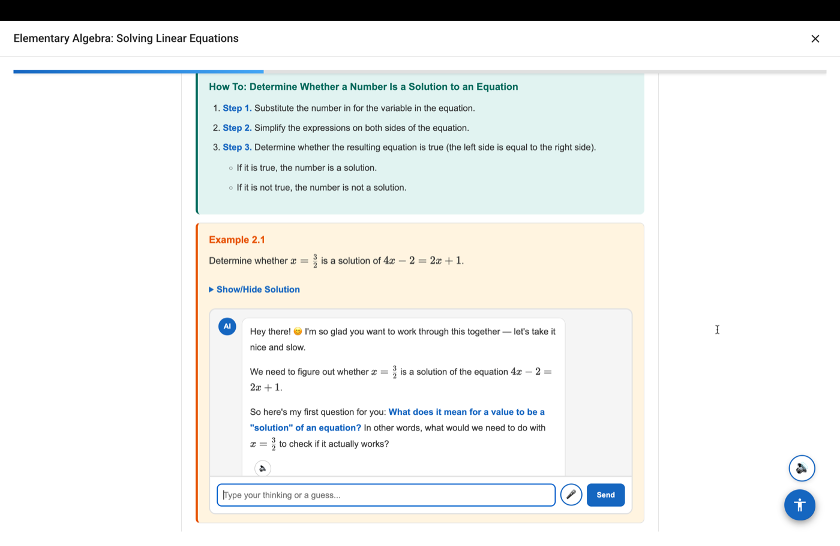
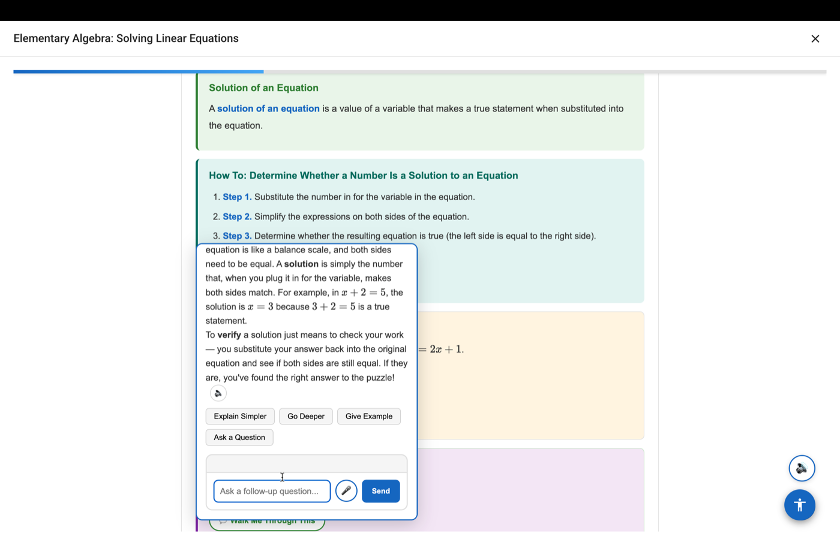
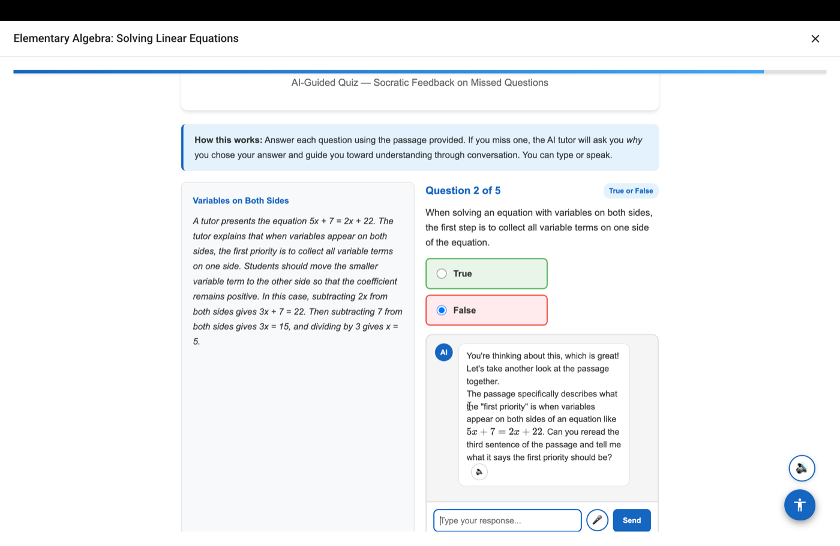
Lexi+Socrat uses the Socratic method. It asks guiding questions, lets the student work through each step, and offers a simpler explanation, an example or a deeper question when the student asks for one.
Mastery has to be shown, not clicked.
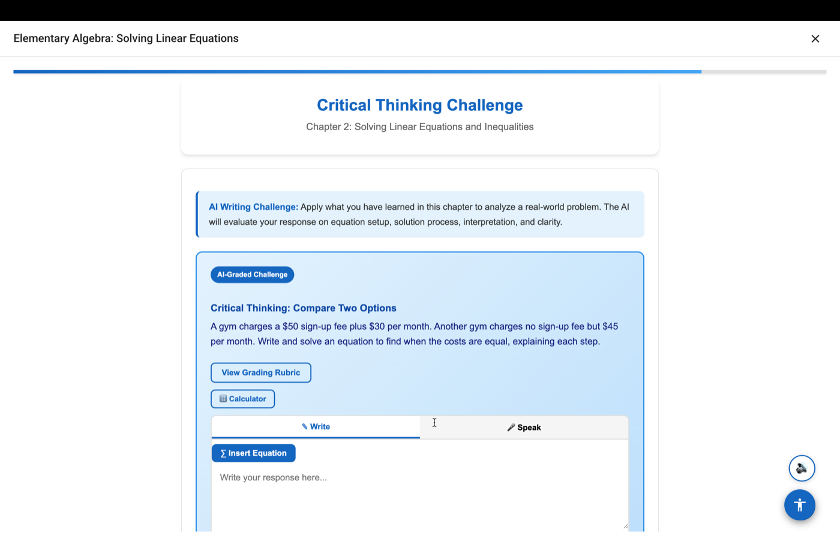
A lesson isn't complete because a student reached the last page. Students explain concepts, reason through scenarios and apply what they learned. They advance at 80% mastery and retry only what they missed.
Honest feedback, not flattery.
AI models tend to agree with whoever they're talking to. A tutor that calls weak work "great" takes away the push to improve, so ours is built to question weak reasoning and point to the next step.
Teachers stay in charge.
The tutor extends what a teacher can do. It doesn't replace the teacher. Teachers see every student's progress, can review and change any AI-assisted score, and have the final word. AI is never the sole basis for a grade, placement, credit or credential.
Students always know it's AI.
Every lesson that uses AI opens with an "About AI in this lesson" notice that lists each AI tool and what it does. Students can turn off AI tutoring, read-aloud and AI grading and still complete the lesson.
It's a tutor, not a companion.
It stays on topic and declines inappropriate requests. If a message suggests a student may be in crisis, it immediately shares crisis resources, like the 988 Suicide & Crisis Lifeline, in the student's language.
Student data stays the student's.
We never sell student data or show ads, and we never use student data to train AI models. Our AI providers are contractually barred from doing so too.
What Socratic learning looks like in a lesson
Screens from Lexi+Socrat lessons running inside an LMS.
Help us study what works
We're looking for schools, colleges and publishers to join our research pilot on AI-supported learning.
What you get
- Two of your courses analyzed and set up with Lexi+Socrat
- Full platform access at no cost during the pilot
- Co-authorship opportunities on published research
- Benchmarking data against peer institutions
The questions we're asking
- Can AI tutoring close the gap between when students start struggling and when they drop?
- Does support in a student's own language improve retention?
- Does adjusting reading level narrow achievement gaps?
- Can mastery tracking flag at-risk students earlier than traditional alerts?
Pilot data is de-identified, reported only in aggregate, and used only with the institution's written agreement.
Apply for the research pilot
Common questions about our AI tutor
Does Lexi+Socrat give students the answers?
No. Lexi+Socrat uses the Socratic method. It asks guiding questions and lets the student reason through each step, offering a simpler explanation, an example or a deeper question when the student asks.
Can AI decide a student's grade?
No. AI is never the sole basis for a grade, placement, credit or credential. Teachers can review and change any AI-assisted score, and the teacher's decision is final.
Is student data used to train AI models?
No. Core Learning Exchange never uses student data to train AI models, and our AI providers are contractually barred from doing so.
Further reading from our blog
AI that asks questions vs. AI that gives answers
Why the design of an AI decides whether it builds capability or replaces it.
AI tutoring only worked when students had to prove it
The 6,000-student study behind our mastery requirement.
When the AI tutor says "great job," students stop learning
Why flattering feedback hurts, and whom it hurts most.
For English learners, AI should ask, not answer
The one design choice that separates help from harm.